
Gwydyr South Forest Resource Plan
Overview
Natural Resources Wales is responsible for the sustainable management of the publicly owned woodlands and forests of Wales. They are managed for the benefit and well-being of the people who visit them and depend on them for their livelihood. This responsibility includes improving their biodiversity and long-term resilience to climate change so that future generations will also be able to enjoy the benefits they provide. Every ten years Natural Resources Wales reviews the long-term management plans for each forest area. These are compiled in a new Forest Resource Plan.
Currently NRW is reviewing the Forest Resource Plan for Gwydyr Forest. This consultation covers Gwydyr South, approximately 3165 hectares of forest in the Conwy Valley located between the Lledr valley in the north and the Machno valley in the south. To the south, the forest is bordered by the Migneint-Arenig-Dduallt Special Area of Conservation which provides conservation interest of lower plant habitats, such as dry and wet heath with extensive areas of upland bog and deep peat.
Gwydyr South has a varied selection of tree species both conifer and broadleaf, but is predominantly conifer (72%). It also has areas of Ancient Woodland and non-native broadleaves (16%), the majority of which are located in the Lledr and at the start of the Machno valley.
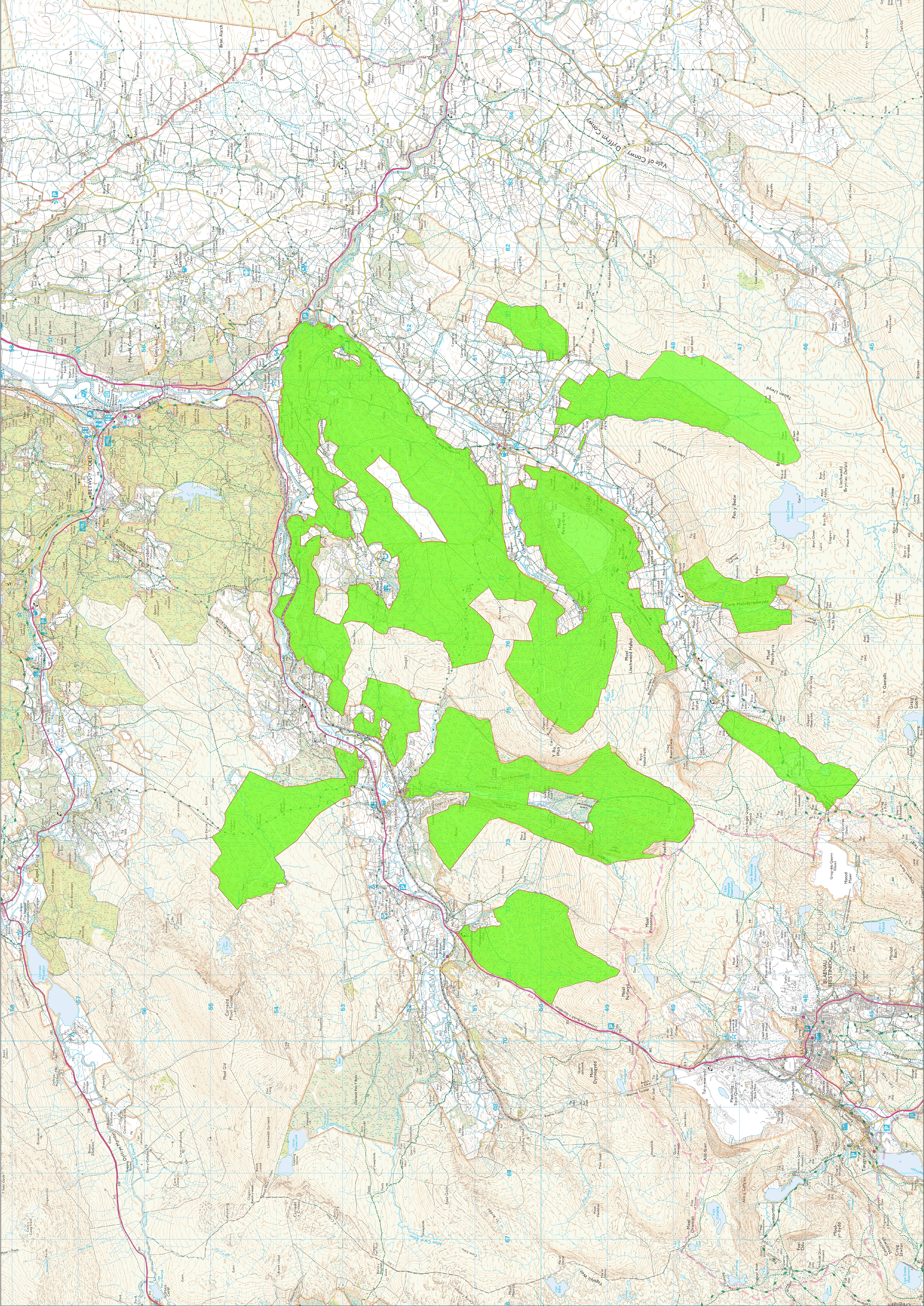
The forest is easily accessible from many roads and rights of way and provides the backdrop to the communities of Dolwyddelan and Penmachno. The area is highly visited, as its located just south of all the famous and well known mountain peaks of Eryri National Park. The forest itself, is well used for hiking, cycling and horse riding. There are a number of smaller car parks and lay-bys in and around the forest that provide easy access to the extensive forest area.
The whole of the forest resource plan area is in Conwy Local Planning Authority and Eryri (Snowdonia) National Park.
Summary of Priorities and Objectives
- Improve the internal structure of the forest by developing age class diversity, varieties of tree size and mixtures of species where possible. Where possible, this can be achieved by continuing forest management using Low Impact Silvicultural Systems (LISS). These may include various shelterwood systems, strip felling, small group felling and continued thinning of both conifer and non-native broadleaf crops.
- Diversify the species composition of the forest by promoting a more diverse restocking strategy, which will include more varieties of broadleaves and natives as well as conifers, such as pines firs and spruces whilst reducing invasive non-native species in and around Ancient Semi Natural Woodland Sites.
- Remove any larch infected with Phytophthora ramorum and plan for the eventual removal of remaining areas of significant larch under the Larch Reduction Strategy.
- Create a diverse permanent forest structure and ecosystem that includes riparian and native woodland, with natural reserves and more successional woodland and open habitats along forest roads and rides. Enhance the woodland ecosystem to increase habitats for numerous bird species, mammals and invertebrates, including Dormice and Bats as well as a diverse range of flora. Gwydyr forest is also important for hosting many sites for rare Lichen species.
- Increase the quantity of deadwood in the forest, which supports a diverse biota within the forest ecosystem.
- Manage Invasive Non-Native species (INNS) such as Rhododendron, Himalayan Balsam, Japanese knotweed, Cherry laurel and Yellow azalea.
- Continue to use Low Impact Silvicultural Systems (LISS) and plan smaller felling coupes where possible , to help minimise the impact on water quality in the wider Conwy catchment, by reducing the risk of sedimentation, acidification, peak flows and flood risk to properties, as well as reducing the visual impacts in the upland forest landscape which is visited by hundreds of thousands of visitors every year
- Manage the upland forest edge adjacent to the Eryri SAC and Mignient Dduallt and Arenig SAC appropriately for the benefit and favourable condition of dry and wet heath, blanket bog habitats and raptors. Consider different options for management such as native successional woodland buffer zones to minimise the impact of seeding conifers and provide shelter for ground nesting birds such as hen Harrier and Black grouse around the SPA.
- Forest Mines SAC. Manage the forest to maintain and improve conditions around rare Calaminarian plant assemblages. This will include a program of scrub and conifer clearance, balanced with permanent broadleaf planting around bat mineshafts and fencing to protect areas of metallophytes.
- Expand the existing riparian woodland network to provide better buffering against harvesting operations and to help improve the water quality in freshwater ecosystems.
- Ensure compliance with the requirements of the Water Framework Directive Regulations 2017 when undertaking operational activities by following best practice as outlined in the ‘UK Forest Standard - Forest and Water Guidelines’ to protect water quality and freshwater ecosystems within the forest.
- Restore Ancient Woodland Sites and improve the Ecological condition of the sites. Thinning around veteran native trees, INNS control and grazing all contribute to improving the ecological condition of these sites.
- Where possible use thinning and LISS management to help achieve PAWS restoration targets by removing invasive non-native tree species such as Western Hemlock. Promote natural regeneration of native species where possible.
- Enhance native woodland connectivity in the wider woodland network of the Conwy Valley, through PAWS restoration along riparian corridors, SSSI’s and SAC for lower plants which feature highly in Gwydyr Forest.
- Areas of afforested deep peat with good potential for restoration and low yield class crops of below 10 will be restored. These will help to lock up historic carbon deposits and help ‘slow the flow’ and aid Natural flood risk management as well as provide valuable upland habitat.
- Maintain the long-term commercial viability of the forest, by planning a sustainable supply of timber and provide for more local and smaller scale timber markets in future, whilst meeting all other objectives and priorities.
- Invest in forest infrastructure and tracking, including better maintenance of forest road and rides to provide better access to help delivery of the plan and more Low Impact Silvicultural Systems in future management.
- Continue to provide the extensive access and recreation provision as part of the National Forest, by maintaining and improving opportunities for continued use of forest roads and public rights of way including other tracks and paths within the forest.
- Manage the forest accordingly to help provide open and least restrictive access and an interactive and fulfilling visitor experience around hotspots like Fairy Glen and Betws y Coed.
- Consider the visual impact on visitors of forest management operations and long-term changes within the forest. Consider using smaller coupes and more thinning and Low Impact Silvicultural Systems
- Protect all monuments and historical features when carrying out forest management operations. Additional consultation is necessary in archaeologically sensitive areas identified by Gwynedd Archaeological Trust.
- Improve the visual and sensory and landscape habitat value of the forest by increasing natives and diversifying the woodland.
- Work co-productively with communities and stakeholders and delivery partners to help develop and deliver a sustainable long-term ‘People Plan’ for future site use, local economy, transport and access, and recreation for the forest and surrounding area. Engage with communities to identify community and social needs and manage forestry assets in response to community and social impacts, e.g. Covid, Healthcare crisis.
- Engage with communities, land owners and interested stakeholders through ‘Llifo Conwy’, a collaborative catchment scale approach to working with the environment, nature, culture, heritage and landscapes, of which Gwydyr forest is a major part of.
- Continue working in partnership through a ‘Future Forest Vision’ with Golygfa Gwydyr community group and allow for further management agreements which may cover a larger forest area.
- Maintain woodland/forest cover as far as possible whilst meeting other objectives namely around SAC/SSSI interest features and deep peat restoration.
- Explore opportunities of new planting on open land within the Gwydyr forest without compromising other important open habitats.
- Continue to explore the potential for small scale renewable energy including hydro-electric projects.
This document helps to explain some of the categories shown on the maps below:
Forest Management and Felling Strategy map
Forest Types and Restocking map
In addition to this on-line survey, two drop-in sessions will be held on:
Thursday 19th March 2026, 2-7pm at the Memorial Hall (Yr Hen Ysgol), Penmachno, Betws y Coed, Conwy, LL24 0UR
Tuesday 23rd March 2026, 2-7pm at Dolwyddelan Community Pavilion, Rear of Dolwyddelan School, Dolwyddelan, Conwy, LL25 0SZ
...to allow members of the public and stakeholders the opportunity to discuss Gwydyr South Forest Resource Plan in person with NRW forest planners.
Why your views matter
We would like to know your opinion and views on the new plans for Gwydyr South so it can help us improve the long-term management of the forest.
What happens next
A summary of the consultation responses and outcomes will be available on this website 4 to 6 weeks after the closing date.
Areas
- All Areas
Audiences
- Forest Management
Interests
- Forest Management
Share
Share on Twitter Share on Facebook