
Challenges and Choices - A Consultation on Wales’s Significant Water Management Issues
Feedback updated 21 Jul 2026
We asked
We asked about how we should track, evaluate and report progress.
We shared the significant water management issues that we think impact the Western Wales, Dee and Welsh parts of the Severn River Basin River Basin Districts and asked whether you agree with them.
We shared our Strategic Environmental Assessment (SEA) draft scoping report and approach to Health Impact Assessment (HIA) and asked whether you agree with the assessment criteria and whether there is any additional information that should be included.
We asked about our StoryMap and whether you found it useful.
You said
We would like to express our thanks to the 54 organisations and individuals who responded to the consultation.
Tracking, evaluation and reporting
One of the key areas respondents wished to see change was regarding tracking and reporting change at a water body scale. You said that you thought this should be clearly prioritised. There were also themes around reporting progress over time, the need for more specific measurable targets that align with Water Framework Directive Regulations metrics. There should be more accountability for delivery of action.
Respondents highlighted that decisions should be informed by robust evidence derived from high-quality monitoring. You also said that this information should be more widely accessible for non-specialists. Some respondents offered to participate in stakeholder groups, and carry out citizen science monitoring.
Programme of Measures (PoM)
Many of you put forward suggestions for the programme of measures. These included tackling many of the big issues set out in the River Basin Management Plans (RBMPs) such as climate change, land use management, wastewater, river restoration, water efficiency, mine water pollution, challenges to our marine environment and chemicals.
Significant Water Management Issues
Most respondents agreed with the challenges set out in the consultation. You highlighted concerns, many of these were around the impacts of wastewater and storm overflows, farming, forestry, chemicals, fisheries and elevated nutrients. You largely welcomed the inclusion of additional pressures such as elevated nutrients and chemicals, but there were also concerns that this mixed up the hierarchies of sources and pressures.
Most respondents agreed that the climate and nature emergencies were concerns, although suggested that climate change in particular should be integrated across RBMPs and should not be used as a reason for measures to be considered technically infeasible.
You said that work should not be carried out in isolation, there are interlinkages between the issues seen in our waters. It is also necessary to work in partnership to improve our waters.
Strategic Environmental Assessment and Health Impact Assessment Responses
Stakeholders responded with support for the proposed SEA framework and that SEA and HIA are being undertaken. There was concern at the lack of detail in the approach for this in light of the Independent Water Commission review and the Upper Costa Beck ruling (High Court ruling on the Pickering Fishery Association), R (On the Application Of) v Environment Agency [2023].
Other stakeholder responses found the draft Scoping reports to be long, complicated and difficult to understand. There was concern from stakeholders regarding the consideration of chemicals and sewage pollution in the water environment that impact on wildlife and people. There was a strong focus in the responses on poor water quality and poor access to the water environment, impacting health and wellbeing of people and communities.
There was also recognition of the challenges posed by climate change on the water environment, in particular water resources including private water supplies.
Some stakeholders advocated the catchment based approach to deliver habitat connectivity, nature based approach and ecosystem resilience in supporting RBMP outcomes. Coordination of infrastructure programmes by partners was also suggested to create more sustainable, effective and cost-efficient interventions.
StoryMap
The StoryMap we developed to complement the consultation was well received, but could be strengthened to improve accessibility and engagement, enhance usability, provide clearer and more transparent evidence (including trends, source apportionment and data confidence), better link between pressures and actions, and offer more catchment-level context.
We did
Responses from this consultation will feed into our approach for the Cycle 4 River Basin Management Plans. The draft plans will be published in late November 2026.
Tracking, evaluation and reporting
We will build on the Interim of Programme of Measures Progress review we published in 2025 and alongside the feedback received ensure that we are sharing more of this work for the next RBMP. With a particular focus on how progress can be more accessible to a wider audience, using reporting metrics and an agreed frequency of updates and seeing how we can improve communication on this. We will work with others to inform progress and understanding of issues. Finding ways to better integrate citizen science data to support this will be looked at.
Programme of Measures
The suggestions put forward have been used to help us to update our Programme of Measures which will be set out in more detail in the draft RBMPs later in 2026. In addition to your suggestions on specific measures, some of your responses has highlighted that we still have more to do to improve our supporting narrative and look at how this information is communicated to a wide range of stakeholders.
Significant Water Management Issues
We felt that the concerns highlighted by respondents aligned with the categories we shared through the consultation. Although we find it useful to categorise the issues, we understand that they are interlinked and will ensure this is covered. We will work with partners to resolve the issues facing our waters.
We have taken on concerns that there is overlap between some categories and will display the significant water management issues in RBMPs as sources, pressures and cross-cutting issues.
Strategic Environmental Assessment and Health Impact Assessment Responses
The SEA scoping reports have been revised in light of comments received and this will feed into the assessment stage of the SEAs and HIA of the draft plans. The Environmental Reports that will accompany the draft RBMP publication will summarise the responses received and how we have actioned them.
As we develop our approaches to the SEA, HIA and Habitats Regulations assessments (HRA) we continue discussions and engagement with statutory consultees to ensure the impact assessments are appropriate for the developing draft RBMPs.
The impacts of poor water quality on human health and wellbeing and access to natural environments is being considered through the SEA and HIA and will be used to assess the impacts of the RBMP measures on water quality, health and access, as well as wider environmental implications. The SEA and HIA will also identify opportunities to deliver benefits for people and the environment. The strategic nature of the RBMPs and the assessments will lend themselves to identification of catchment based approaches and opportunities for integration and collaboration between partners.
StoryMap
We welcome this feedback and will use it to inform ongoing development of future StoryMaps. We will explore opportunities to enhance accessibility and usability, strengthen the presentation and transparency of evidence, improve links between significant water management pressures and the Programme of Measures, and incorporate clearer contextual information to support understanding and engagement.
Overview
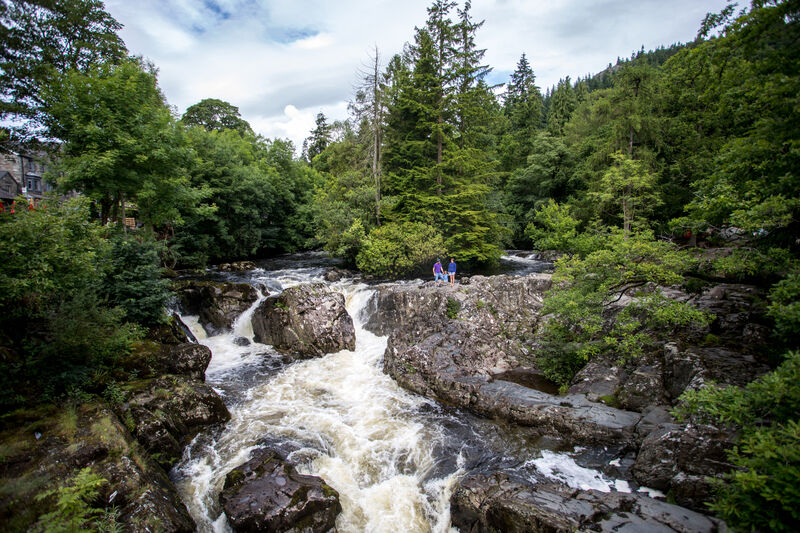
Water is a vital natural resource for the environment and people. Water creates and sustains the ecosystems upon which all life depends. It is vital to the economy and for health and is used to generate power, run industries and grow food. Physical modifications are severely reducing the diversity and resilience of our waters. Rural areas, wastewater, towns, transport and abandoned mines are sources of pollution such as chemicals, metals, nutrients and bacteria, in addition to this, plastics and microplastics can be harmful to people and nature. The presence of invasive non-native species can have significant ecological and economic impacts. Climate change is anticipated to cause increasing temperatures, more intense rainfall and extended periods of dry weather.
The combined effect of these issues and competing demands for water means that our water ecosystems are under pressure. Widespread species, including salmon and sea trout, are undergoing catastrophic declines; salmon is predicted to be locally extinct in some Welsh rivers by 2030.
Our investigations and research through the River Basin Management Plans (RBMPs) tell us what the challenges are, and we want to share this with you. We need to continue to work together to take urgent, collaborative action to address these issues. By sharing what the main challenges facing our water environment are, we want to hear from you about how our waters can be improved.
Have Your Say on the Future of Water in Wales
We are seeking your views on the key issues affecting our water environment and the actions needed to address them. Your input will help shape the future of water management in Wales.
A PDF copy of this consultation, including the questions, is available here.
Areas
- All Areas
Audiences
- Adfer afonydd
- Anglers
- Arbenigwyr adfer mwyngloddiau
- Citizens
- citizens
- Coal Authority
- Coal Tip Safety
- Coastal Group Members
- Cockles
- Community Volunteers
- DCWW
- Designated Landscapes
- Educators
- EPR and COMAH facilities
- Equality, Diversity and Inclusion
- Flooding
- Fly-fishing
- Forest Management
- Gwent
- Gwirfoddolwyr Cymunedol
- IMPEL Network
- Llifogydd
- marine developers
- marine planners
- Metal mines
- Mine recovery specialists
- MSs and MPs
- Mwyngloddiau metel
- National Access Forum
- Natur am Byth!
- Network Completion Project Task and Finish Group
- Newport Green and Safe Spaces
- NFU
- Rheoli coedwigoedd
- River restoration
- Rivers
- SoNaRR2020
- South West Stakeholder group
- Tirweddau dynonedig
- Wales Biodiversity Partnership
- Wales Biodiversity Partnership
- water companies
- Water Resources
- Woodland Opportunity Map users
Interests
- Abstraction Licences
- Acorn Antics / Miri Mes
- Adfer afonydd
- Adfer mwyngloddiau
- Adnoddau Dwr
- Bioamrywiaeth
- Biodiversity
- Climate change adaptation measures
- Coal Tip Safety
- Community Engagement
- Community Voulnteering
- Consultation
- Customer Experience
- Customer Journey Mapping
- Cynllunio dwr
- Datganiad Ardal De Orllewin
- Datganiad Ardal Morol
- Datglygiad
- Dee
- Development
- Dysgu proffesiynnol
- EIA
- Engagement
- Equality, Diversity and Inclusion
- Fforwm Mynediad Cenedlaethol
- Fishing
- Flooding
- Forest Management
- Fruitful Orchard Project
- Gwastraff
- Gwent
- Gwerthu Pren
- Gwirfoddoli Cymunedol
- IMPEL Network
- Landscapes
- Llais Rheoleiddio
- Llifogydd
- Marine Area Statement
- Marine Area Statement
- Marine Protected Areas Network Completion Project
- Metal mines
- Mine recovery
- Mwyngloddiau metel
- National Access Forum
- Newport Green and Safe Spaces
- Permits
- Professional learning
- Pysgota
- Regulation
- Regulatory Voice
- resources
- Rheoli Coedwig
- river basin planning
- River restoration
- South West Area Statement
- Species Licence
- Stakeholder Management
- Strategic review of charging
- Terrestrial ecosystems and species
- The Hub
- Timber sales
- Tirweddau
- Trwydded Rhywogaeth
- Trwyddedau
- Waste
- water framework directive
- water planning
- Water Resources
- WFD
- Woodland Opportunity Map
- Y Gyfarwyddeb Fframwaith Dwr
- Ymgysylltu cymunedol
Share
Share on Twitter Share on Facebook